
Skip to content
Puri Saren UbudHERITAGE GUIDEView map
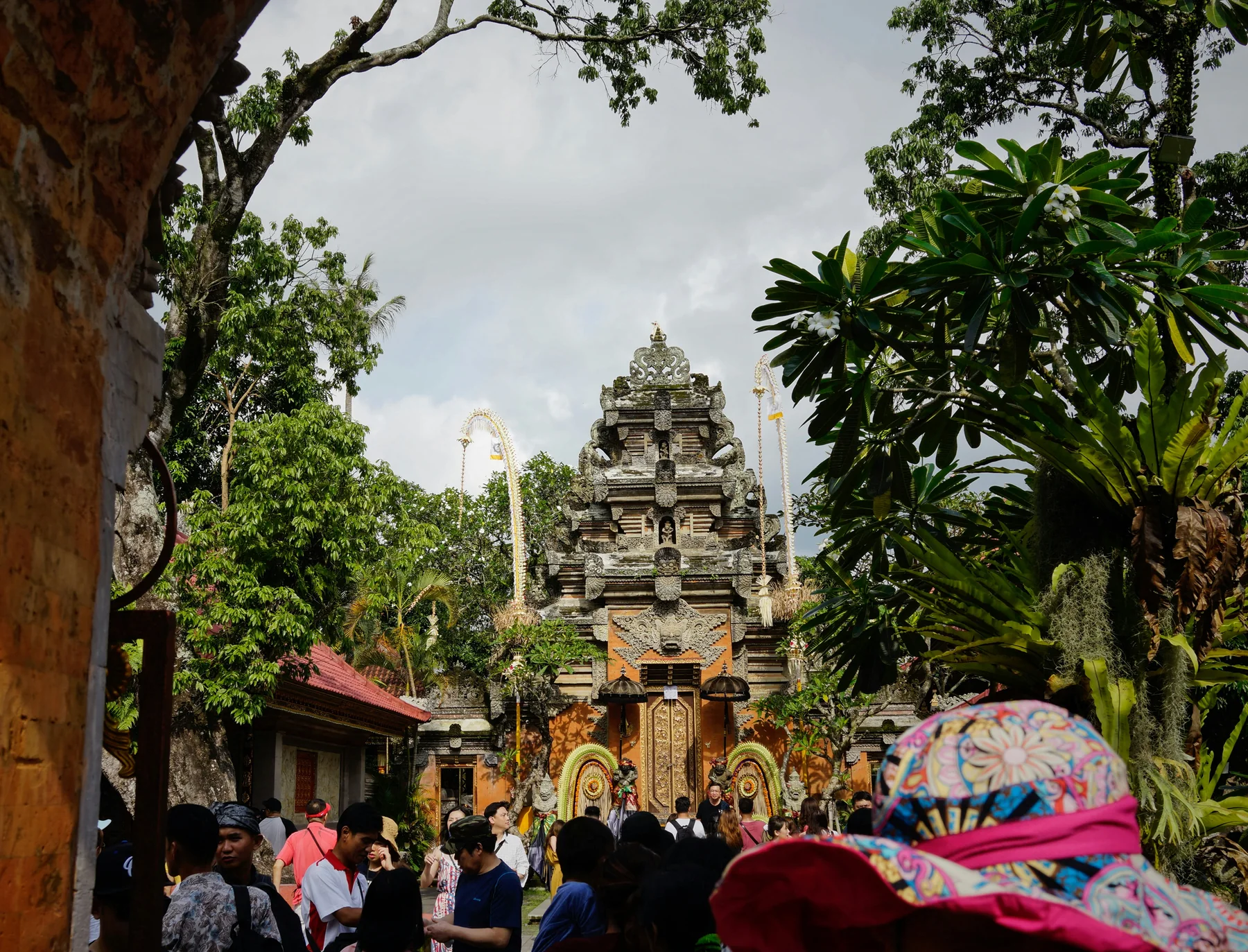
Gateway and architecture of Puri Saren Agung in central Ubud
Ubud · Gianyar RegencyRoyal palace & cultural space

Independent · noncommercial guide

Puri Saren
Agung.Ubud Palace · Bali

In the heart of Ubud, this palace is still read as a living space: royal residence, performance stage, ceremony courtyard, and an archive of Balinese architecture you can read through detail, spatial order, and visiting etiquette.

Photo: Niklas Weiss / Unsplash · stored locally.

Orientation

Six facts for reading the place

Operational details can change; this page separates location facts that can be re-checked from historical and cultural context that is more stable.

Local name
Puri Saren Agung
Location
Jl. Raya Ubud No.8, Ubud, Gianyar, Bali 80571
Listed hours
07.00–17.00 daily; Maps 19 October 2026
Daytime entry
Maps: free, checked 19 October 2026
Access
Only staff-permitted areas
Character
Living royal palace and cultural space
History & context

Not a ruin. A living palace.

Official Indonesian tourism sources describe Ubud Palace or Puri Saren Agung as the official residence of Ubud’s royal family. Part of the area is open to the public, while its residential and cultural functions keep running.

The right way to see Puri Saren Agung is not only to look for the “oldest building”, but to understand the relationship between local power, Balinese spatial order, performance, and customary life in central Ubud.

Ubud kingdom era

Royal residence and seat of power

Puri Saren Agung grew as the residence of Ubud’s royal family and a local centre of power. So the complex is not just an old building: its residential, customary, and representative roles still matter in how the place is understood.
Art in Ubud

Ubud as a meeting point for the arts

Ubud became known as a centre of Balinese art. The palace environment became part of the ecosystem of performance art, gamelan, ceremony, and cultural patronage that shapes Ubud’s image today.

Cultural life

Dance and gamelan as living tradition

Documentation from the Gianyar Regency government describes Puri Saren’s role in Ubud’s arts and culture. That record is not a current performance schedule.

Today

Partly open, part still private

Some areas are open to the public, while others remain tied to the royal family’s life and customary activities. Access boundaries can shift during ceremonies or special events.

Methodology note: we avoid a single construction date that often differs across popular sources. For public context, government and official tourism sources are given priority.
How to read the architecture

Look at the sequence of space, not just the carving.

Balinese palace architecture is shaped by courtyards, gates, bale, thresholds, materials, and function. The publicly visible part is only one layer of a wider complex.

01

Gateway and thresholds

A gateway is not merely decorative. In Balinese architecture, a threshold marks the passage from outer space to space with its own order, function, and degree of sacredness. Notice the brickwork, paras stone, and carvings at the entrance.

02

Bale and courtyards

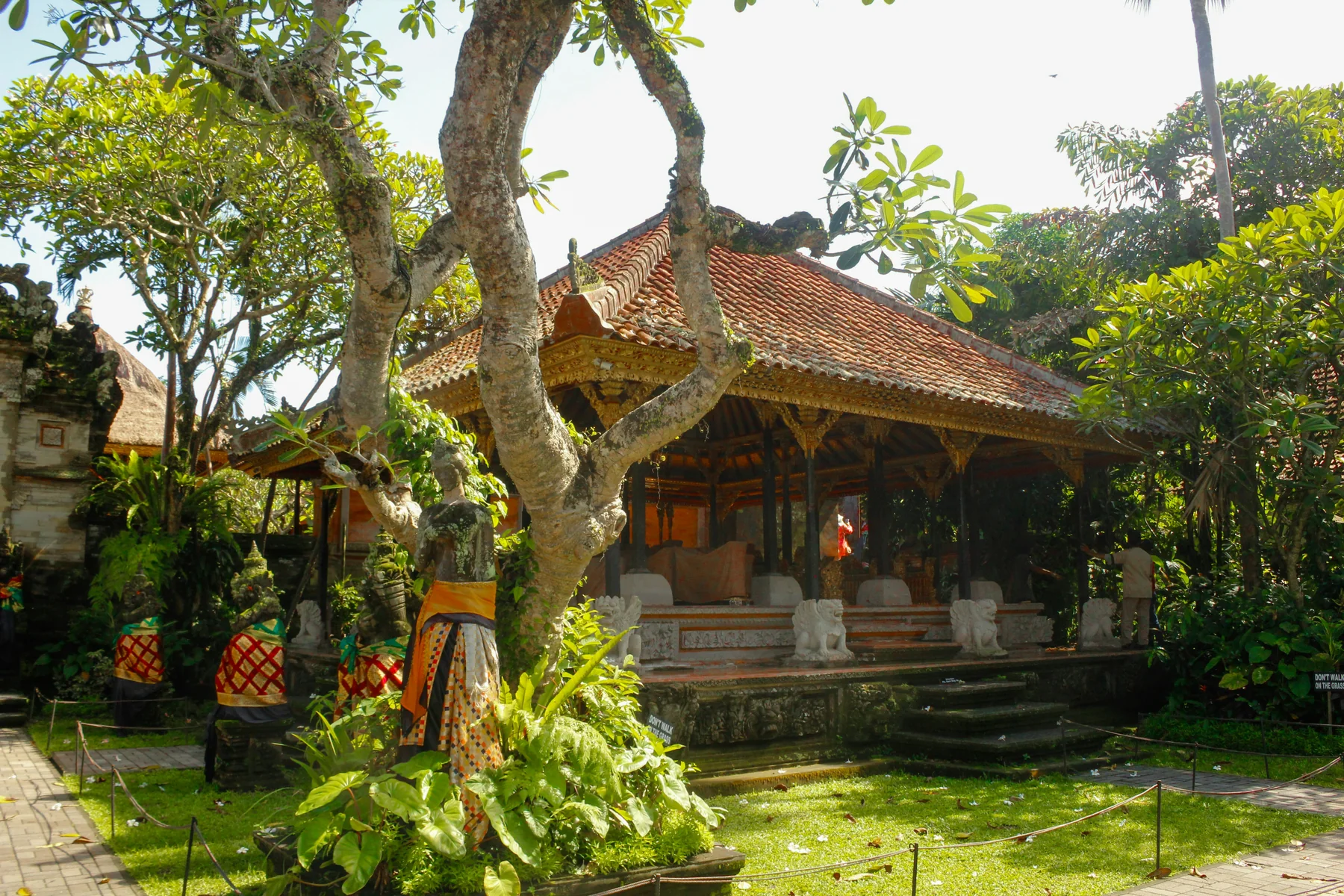
Open pavilions (bale) rely on the relationship between roof, columns, courtyard, and air flow. The spatial experience comes from the sequence of courtyards, not from one enclosed building like a European palace.

03

Red brick and paras stone

Terracotta tones, grey stone, floral carving, and figurative detail give rhythm to the walls and gates. The materials look decorative yet show the skill of Balinese traditional builders.

04

Space that still functions

Do not read the whole complex as an exhibition object. Certain areas still connect to residence, ceremony, performance preparation, and customary activity; respect the boundary markers.

Pavilion and traditional Balinese architecture in the Puri Saren Agung area

Visual etiquette

Photograph with respect.

Do not climb gates, sit on ritual structures, block processions, or move offerings for a photo composition. During ceremonies or performances, follow the barriers and on-site guidance.

Photo: Ameya Khanzode / Unsplash · stored locally.

Visit planning

Arrive with the right expectations.

Puri Saren Agung suits a short visit deepened by observation. Its value is not the size of the public area, but the context of royalty, architecture, and performance culture.

Hours

07.00–17.00

Google Maps listing checked 19 October 2026, not the evening performance schedule. Access can adjust to customary activities.

Cost

Daytime: check terms

Maps on 19 October 2026 shows free daytime general admission. It does not cover performances or guarantee full access; confirm on site.

Best time

Morning after opening

More comfortable for detail and less heat. Central Ubud gets busier toward midday.

Duration

As access allows

Match duration to permitted areas, customary activities, and mobility needs.

Before entering

Check that day’s activities

If there is a ceremony, performance preparation, or family event, some paths may close temporarily. Respect access decisions on the ground.

Inside

Move slowly

Mind thresholds and uneven floors. Give space to residents, staff, musicians, and ceremony groups using the complex.

Evening show

Treat as a separate agenda

Dance and gamelan schedules can differ from daytime visiting hours. Verify the type of show, start time, and ticket on the same day.

Detailed transport

To the heart of Ubud.

A safe address to give the driver: Puri Saren Agung, Jl. Raya Ubud No.8, Ubud, Kabupaten Gianyar. Travel time is strongly affected by traffic.

From I Gusti Ngurah Rai International Airport (DPS)

Ngurah Rai is Bali’s main air gateway. Land options include official airport taxis, licensed taxis, car hire with driver, or app-based transport by pickup zone. The trip to Ubud can stretch sharply at peak hours; do not schedule tight connections afterwards.

Bus / public transport

Trans Metro Dewata and developing Ubud mobility links can help reach the Gianyar/Ubud area, but routes, stops, and feeder service patterns change. Use the Bali Provincial Transport Agency channel to check the active network on the travel day, then continue on foot or by local transport from the nearest point in central Ubud.

Taxis and app-based transport

Ask to be dropped at a safe roadside point that does not block central Ubud flow. Some areas have local pickup rules; follow signs and staff guidance. Confirm the fare or app estimate before departure.

Private car or motorbike

Central Ubud roads are busy, some stretches narrow, and parking near the site is limited. Avoid stopping in front of the gate. Use official public parking and walk from there.

Walking from central Ubud

If you stay in central Ubud, walking is often the simplest choice. Mind uneven sidewalks, busy crossings, rain, and midday heat.

Facilities & needs

Small things that decide comfort.

Because this is a cultural complex in the city centre, some needs are more realistically met in the surrounding Ubud area than inside the palace. We do not recommend specific vendors or operators.

Plan ahead

Toilets / WC

Availability in the public visiting area can be limited. Use public facilities in central Ubud before entering if needed.

Plan ahead

Parking

Do not rely on parking right at the gate. Central Ubud is dense; look for official public parking and follow local signs.

Plan ahead

Wheelchair access

Stone surfaces, thresholds, and steps make the route not fully barrier-free. A companion can help.

Easy to find nearby

Food & drink

Many warung, restaurants, cafés, and daily-needs shops in central Ubud; consume outside the restricted areas.

Easy to find nearby

Accommodation

Central Ubud has guesthouses, homestays, boutique hotels, and villas. Choose by walkable access and mobility needs, not commercial ranking.

Easy to find nearby

Daily shopping

Traditional market, minimarket, and supermarket available in Ubud. Check each facility’s opening hours on arrival.

Plan ahead

Fuel & EV charging

Petrol stations and EV charging points exist in wider Ubud/Gianyar; location and status should be checked before departure.

Plan ahead

Weather & shade

Part of the visit is outdoors. Bring sun or rain protection; surfaces can be slippery after rain.

Atmosphere

Photos are chosen as documentation of the Ubud atmosphere and palace area; not fabricated illustrations. All main image files are stored locally so the page does not depend on third-party image links.

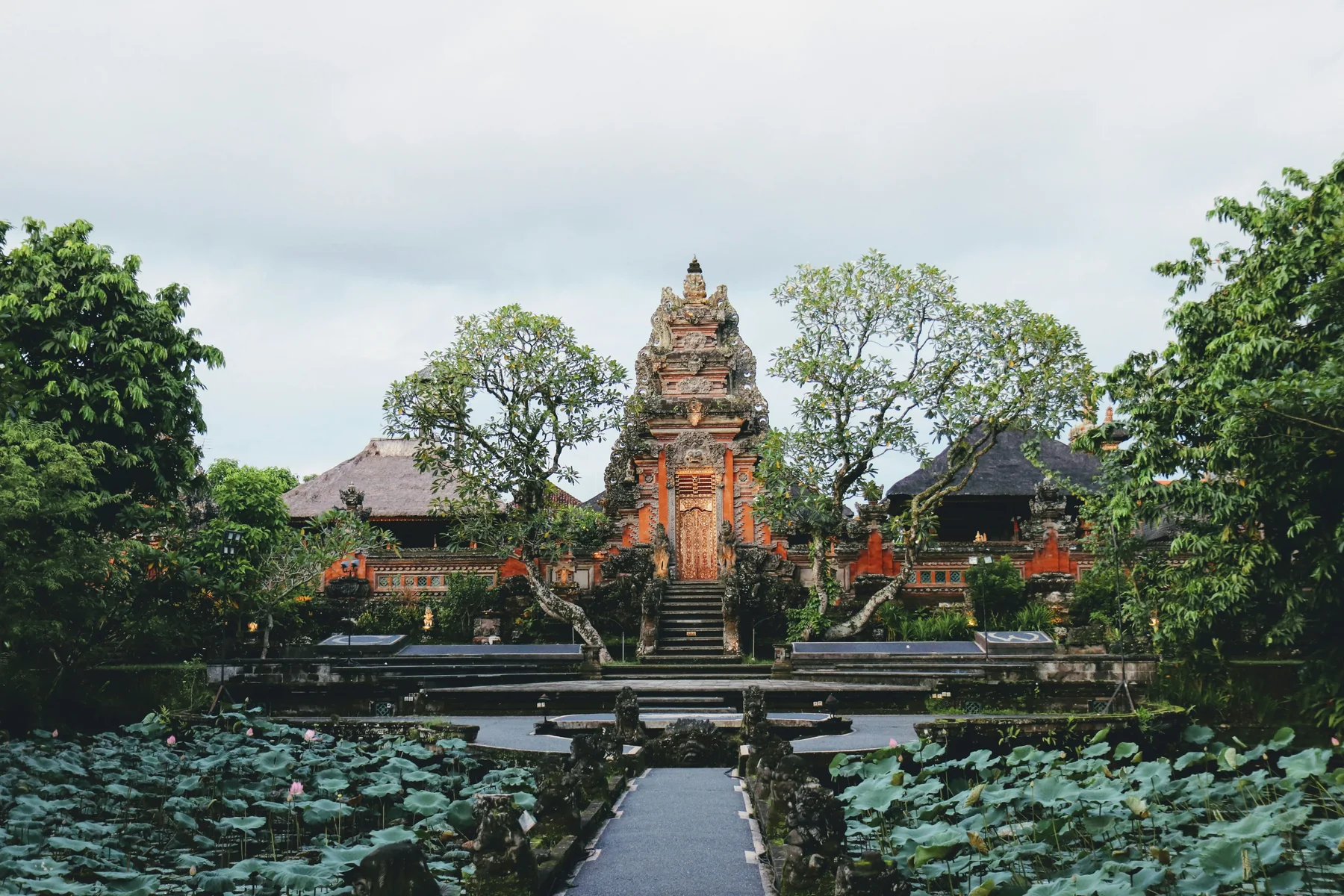
Lotus pond and Balinese architecture in Ubud
Visual documentation of the Ubud, Bali area.Photo: Mitch Hodiono / Unsplash · Unsplash licence.
Eating nearby

Choose by type, not a “best list”.

As a noncommercial guide, we do not rank or promote specific businesses. In central Ubud, common choices include:

  • Balinese / Indonesian warung — good for nasi campur, vegetables, side dishes, and daily menus.
  • Vegetarian / plant-based restaurants — Ubud has many; still ask about ingredients and allergens.
  • Cafés, bakeries, and light meals — useful for a short rest before or after the visit.
  • Market and daily-needs shops — practical for drinking water, fruit, and travel needs.
Nearby sights

Build one cultural trail.

Several places can be combined because they sit in central Ubud or are easy to reach from there. Tickets and hours for each should be checked separately.

Ubud Art Market

Reading the relationship between the royal centre, market, crafts, and Ubud’s urban space.

Pura Taman Saraswati

A temple complex and water landscape that adds architectural and religious context.

Campuhan Ridge Walk

A walking option to see green landscape away from the dense town centre.

Mandala Suci Wenara Wana

A forest-and-temple area; treat it as its own destination with its own wildlife rules and ticket.

Map

Ubud’s central point.

The Google map below uses the Indonesian interface. Loading the map may connect your browser to Google services; our privacy settings are explained in our policy.

Map coordinates: −8.5065977, 115.2625884Get directions ↗
FAQ

Questions before you come.

Answers are built for practical planning and to avoid misleading assumptions, especially about tickets, shows, access, and parking.

Is entry to Puri Saren Agung free?

Google Maps checked on 19 October 2026 shows free daytime general admission. This is only a listing snapshot, not a guarantee that all areas are accessible, and it does not cover performances. Confirm on site; we have not verified prices or performance schedules.

When is Ubud Palace open?

The Google Maps listing checked 19 October 2026 shows 07.00–17.00 daily. These are not evening performance hours and do not guarantee the whole palace is open. Confirm access with staff on the day of visit.

Is the palace still occupied by the royal family?

Yes, official Indonesian tourism sources say part of the complex is still used by the royal family. So not all parts are open to the public.

Are there dance performances every night?

Indonesia.travel mentions traditional dance performances at night. The source does not confirm performances every night. Confirm date, start time, performance location, and ticket price with the organizer before buying.

What is the right dress?

Wear modest, comfortable clothing. If there is a ceremony or an area with specific rules, follow staff and local guidance. Do not move offerings.

Is it easy to visit with a wheelchair?

Not entirely. Some surfaces are uneven, with thresholds and steps, and circulation can be narrow. Visitors with mobility needs should come with a companion and assess the route on site.

Is there parking in front of the palace?

Central Ubud is very dense and parking right at the gate cannot be guaranteed. Safer to plan official public parking, drop off at a safe point, or walk from central accommodation.

When is the best time to come?

Morning after opening is usually more comfortable for observing architectural detail and avoiding heat. Afternoon gives a different mood, but do not treat daytime visiting hours as evening performance hours.

Topic guides

Go deeper on one question

Focused pages that answer one visitor question each — visit planning, culture, food, nearby sights, and itineraries around Puri Saren Agung.

Visit Planning

Complete visit guide to Puri Saren Agung

A complete guide to visiting Puri Saren Agung (Ubud Palace): which areas are open, how to move through them, and etiquette inside a living royal palace.

Opening hours: day and night

The difference between daytime visiting hours and evening performances at Puri Saren Agung, and why they must not be mixed up.

Tickets and costs

Ticket and cost information for Puri Saren Agung: daytime visit, performances, and possible extra expenses.

How to get to Puri Saren Agung

Comparing ways to reach Puri Saren Agung from central Ubud, the airport, and other common departure points.

Parking near Puri Saren

Parking considerations near Puri Saren Agung in central Ubud: gate limits, public parking, and walking options.

Taxi, rideshare, and chartered car

Drop-off advice for taxis, app-based transport, or hired vehicles with driver going to Puri Saren.

Best time to visit

Choosing when to visit Puri Saren based on weather, crowds, and daytime vs evening slots.

How much time you need

How to decide visit length at Puri Saren based on interest: short observation, photos, or combined with a show.

Visiting with kids

Notes on bringing children to Puri Saren Agung: comfort, supervision, and linking to kid-friendly activities in Ubud.

Wheelchair access

Confirmed and unconfirmed facilities for wheelchair visitors at Puri Saren Agung, and how to ask.

Visiting on a rainy day

Backup plans for rain: the palace open areas, cover, and indoor activities around Ubud.

Dress and cultural etiquette

Dress rules and cultural etiquette at Puri Saren Agung and how they differ from a pura (temple).